
Tattoo Removal
Medically reviewed by Deborah Lenchus, MSN, APRN · Last reviewed July 2026
What Is Q-Switch Laser Treatment?
The Q-switched laser is a specialized system that removes unwanted pigment from the skin, whether that pigment is tattoo ink or the brown spots left by sun and age. It delivers ultra-short, high-energy pulses of light that shatter pigment into microscopic particles your body can then clear away naturally. At LuXe Concierge Aesthetics, treatments use a Q-switched Nd:YAG laser (1064nm/532nm), a versatile, powerful technology that’s safe across all skin tones.
How the Q-Switch Laser Works
The key is speed. The Q-switched laser fires pulses measured in billionths of a second, delivering intense energy in an instant. That energy is absorbed by the pigment and breaks it into tiny fragments without significantly heating the surrounding skin. Over the following weeks, your body’s immune system flushes those fragments away, so the treated area gradually lightens. Different wavelengths target different pigments, which is what lets the laser address both dark tattoo ink and everyday sun spots.
What Q-Switch Treats
- Tattoo removal, including stubborn dark ink
- Sun spots, age spots, and freckles
- Other benign pigmented lesions
- Overall skin tone and clarity through laser toning
Because it’s so precise about targeting pigment, the Q-switch laser is a go-to for anything from erasing an unwanted tattoo to clearing the brown spots that make skin look older.
Laser Tattoo Removal: What to Know
Tattoos are designed to be permanent, so removing them takes patience and the right technology. The Q-switched laser breaks down the ink particle by particle over a series of sessions. Dark inks like black and blue respond most readily, while some bright colors are more stubborn. Because the ink sits at different depths and densities, most tattoos need several sessions spaced weeks apart to fade and clear.
Safe on All Skin Tones
One of the biggest advantages of the Nd:YAG Q-switched laser is that its 1064nm wavelength is safe for darker skin tones, which older or less specialized devices can’t say. That makes it a reliable choice for pigment and tattoo removal across a wide range of patients, when the settings are correctly matched to the skin.
Who Is a Good Candidate?
Good candidates include anyone who wants to remove or fade an unwanted tattoo, or to clear sun spots, age spots, and uneven pigment. Realistic expectations matter, especially for tattoos, since removal is a gradual process. A consultation assesses your tattoo or pigment, your skin type, and how many sessions to expect.
Who Should Avoid It?
Q-switch treatment is generally avoided during pregnancy, over active infections or certain skin conditions at the site, on recently tanned skin, and while taking medications that increase light sensitivity. Melasma requires special caution and a tailored approach. Your health history is reviewed beforehand to keep treatment safe and effective.
What to Expect During Treatment
The area is cleansed and often numbed for comfort, especially for tattoos. As the laser passes over the skin, many people describe the feeling as a rubber-band snap or hot pinpricks; tattoo sessions are quick, often just minutes depending on size. For tattoos, the skin may frost white briefly right after treatment, which is normal and fades quickly.
How Many Sessions and What Results to Expect
Pigmented spots often clear in just one or two sessions. Tattoos take longer — typically several sessions spaced six to eight weeks apart, sometimes more for large, dense, or multicolored work, so the ink can fade and the body can clear it between visits. Each session lightens the target further until the desired result is reached.
Recovery and Aftercare
Downtime is minimal. Expect some redness, mild swelling, and for tattoos possibly light scabbing or blistering as the area heals over a week or so. Keep the area clean and protected, avoid picking, skip sun exposure, and use sunscreen diligently. Detailed aftercare instructions are provided for each treatment.
Risks and Side Effects
In trained hands, Q-switch treatment is very safe. Temporary redness, swelling, and lightening or darkening of the treated area are the most common effects. Less commonly, incorrect settings can cause pigment changes or, rarely, scarring, which is why skin-type-appropriate settings and an experienced provider are essential. Recent sun or tanning raises those risks, so it’s important to come untanned.
What’s Realistic, and What Isn’t
Q-switch lasers are excellent at fading and removing tattoos and clearing unwanted pigment, but results take time and a series of sessions, especially for tattoos. Some ink colors resist fully clearing, and pigment can occasionally recur with sun exposure. With realistic expectations, sun protection, and a complete series, the results can be dramatic.
Why It Matters Who Performs It
Pigment and tattoo removal depend entirely on choosing the right wavelength, energy, and settings for your skin and target — get it wrong and you risk pigment change or scarring. At LuXe Concierge Aesthetics, treatments are performed under the care of Deborah Lenchus, MSN, APRN, a nurse practitioner with more than twenty years of experience who teaches advanced aesthetic techniques to other nurse practitioners, PAs, and physicians through both LuXe Concierge Aesthetics and Elevate Aesthetics Academy, and who has performed live VI Peel demonstrations and presented at medical conferences sponsored by VI Peel.
Why Choose LuXe Concierge Aesthetics
LuXe is a private, concierge-style practice where treatments are performed with medical expertise. Patients travel from Weston, Plantation, Cooper City, Pembroke Pines, Southwest Ranches, Sunrise, and Fort Lauderdale for safe, effective tattoo and pigment removal on all skin tones.
Ready to clear unwanted ink or pigment? Book a consultation to build your Q-switch treatment plan. Call (754) 715-5667 or book online today.
Q-Switch YAG Laser Tattoo Removal
Erase the Past, Embrace the Future.
- Safe for all skin types
- Q-Switch “Gold Standard” in tattoo removal
- Also treats age spots, freckles, sunspots, and some birthmarks
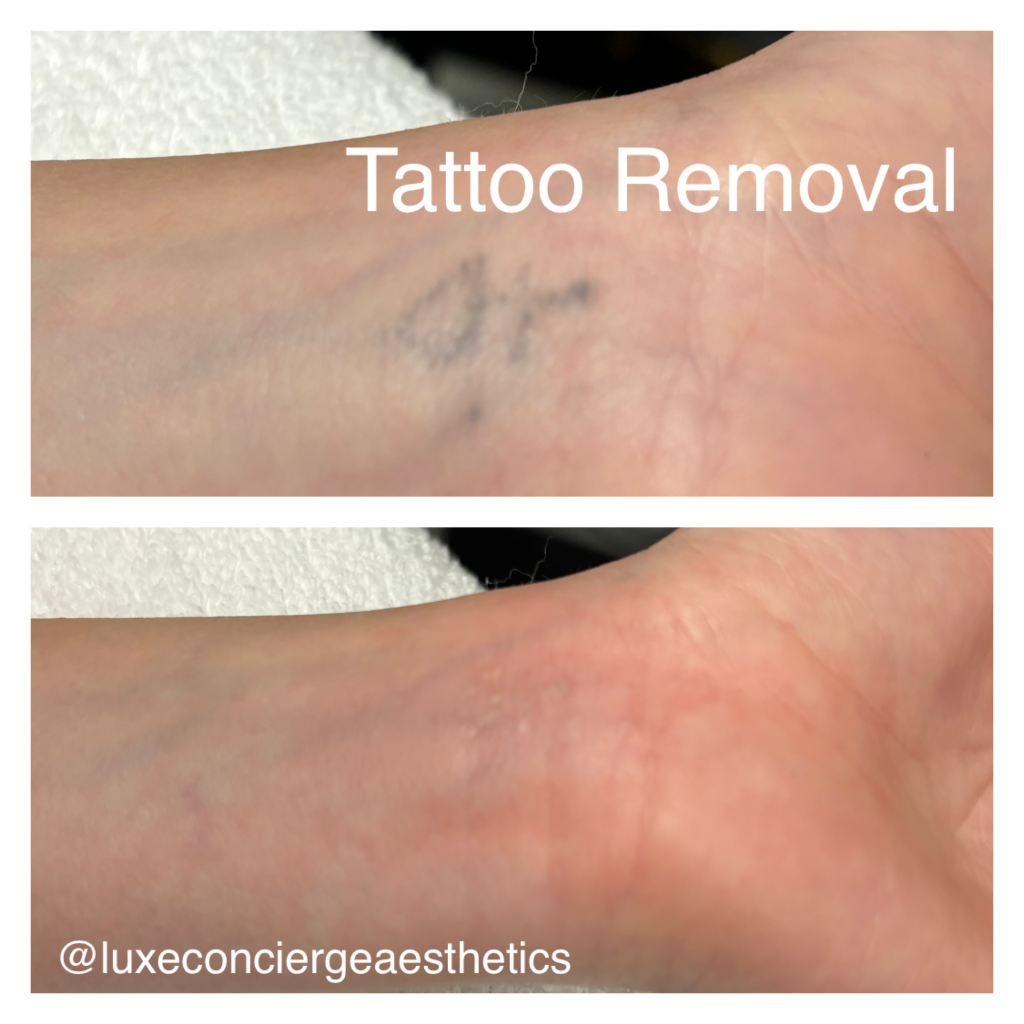
Before & After: Tattoo & Pigment Removal
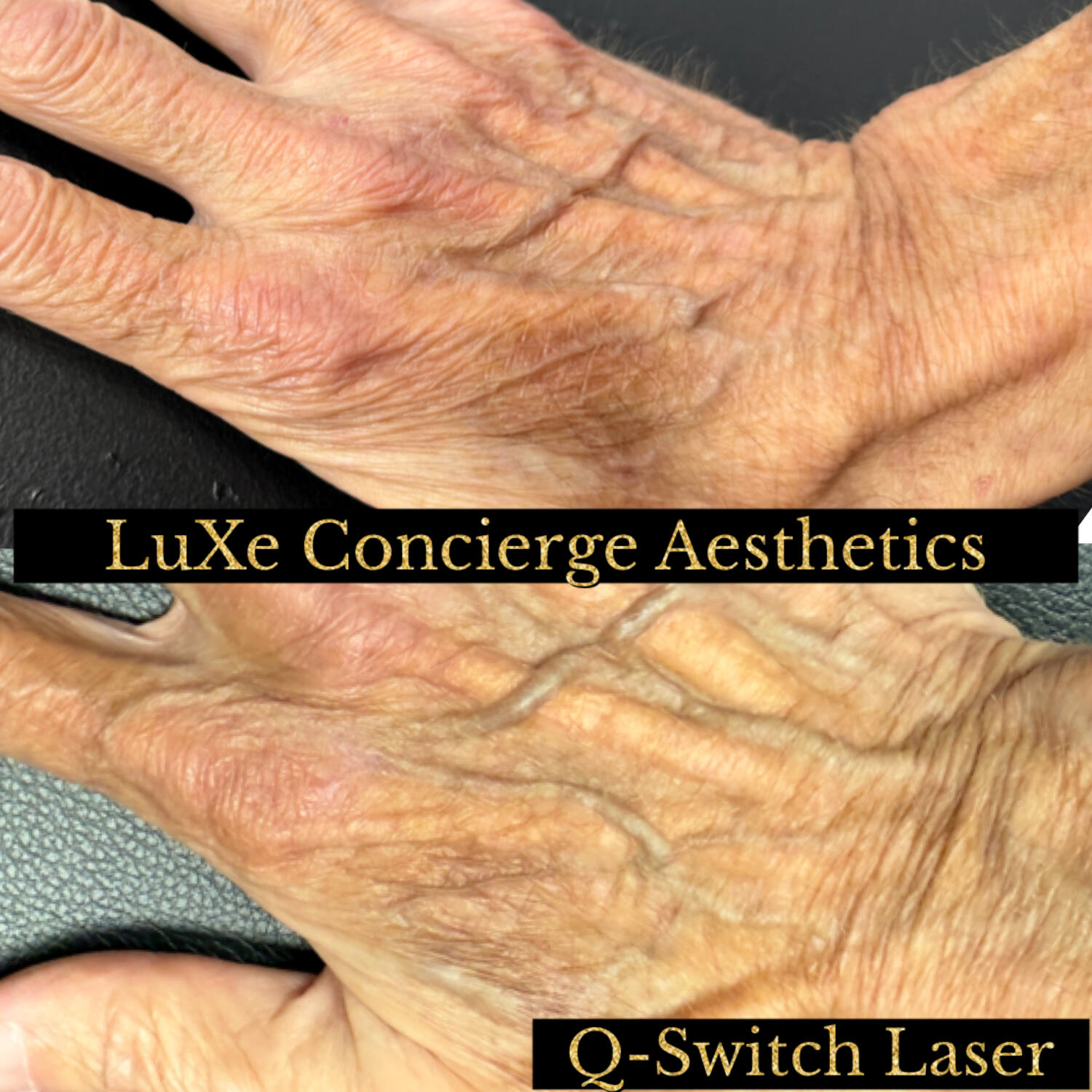
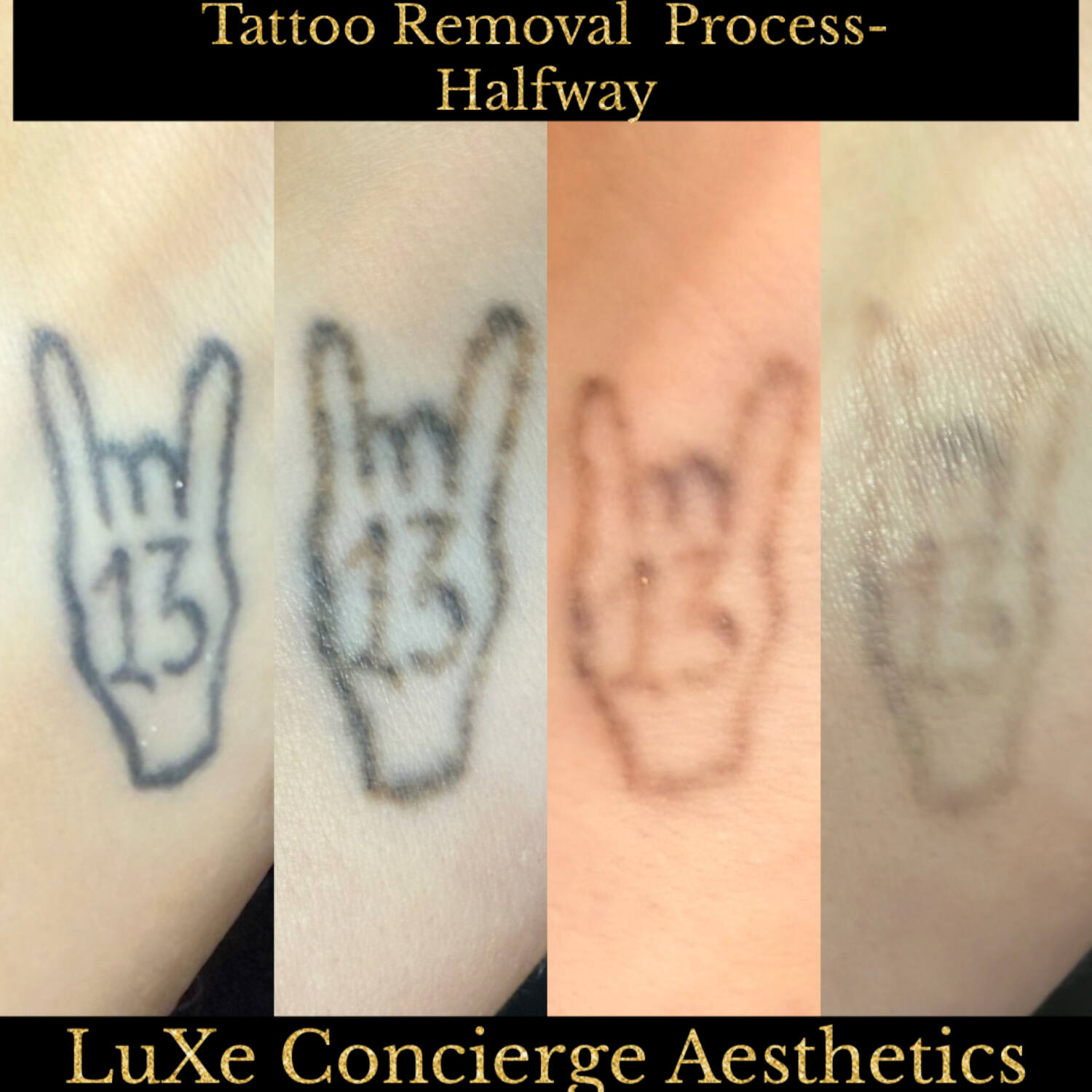
Q-Switch Treatment Videos
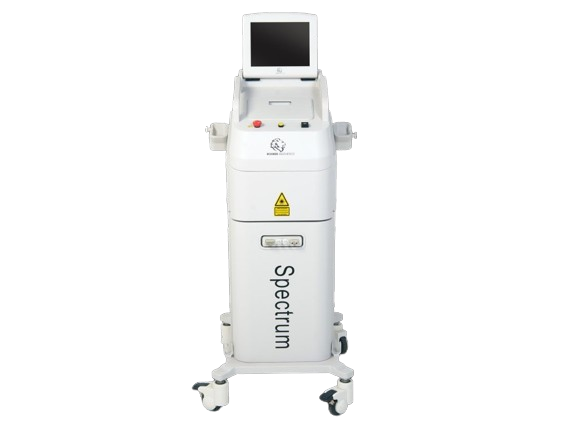
Spectrum Q-switched 1064nm/532nm Laser For Tattoo Removal
What is Tattoo and Pigment Removal?
Tattoo and pigment removal involve the use of Q-switched laser treatment, where the “Q” stands for quality. This treatment method employs high-power laser beams with precision, minimizing thermal interaction with surrounding tissues and specifically targeting tattoo ink pigments. The Q-switched laser, known as the gold standard for tattoo removal, emits extremely short pulses of high-energy light that are absorbed by tattoo pigment particles without affecting the surrounding skin. This process heats up the pigment, causing it to break down into smaller particles. Additionally, the Q-switched laser can be utilized to treat pigmented lesions such as age spots, freckles, sunspots, and some birthmarks by targeting melanin in the skin’s superficial layer. When the pigmented lesion absorbs the light energy from the laser, it converts into heat.
What sets Q-Switched Tattoo Removal apart?
Q-Switched laser technology stands out as the sole method capable of penetrating the dermis and effectively shattering tattoo ink using photoacoustic waves, all while preserving the integrity of surrounding skin tissue. Other methods either fail to reach and eliminate the ink or inflict excessive damage to the skin, leading to scarring. With wavelengths of 1064nm and 532nm, Q-Switched lasers address over 80% of tattoo colors.
What are some indications for Q-Switched Laser Treatment?
Q-Switched laser treatment is suitable for addressing various concerns, including tattoos, pigmented lesions such as age spots, freckles, sunspots, and certain types of birthmarks.
What colors of tattoos can be treated effectively?
Tattoos in colors like black, blue, dark blue, dark green, brown, red, purple, and orange respond well to treatment. However, colors like tan, yellow, bright green, and sky blue may pose more challenges.
What can I expect during and after the treatment?
During the laser tattoo removal process, some discomfort is normal, but it typically subsides with time. The treated areas may feel tender and sensitive due to swelling and blistering. You may notice frosting immediately after treatment, caused by the rapid heating of skin pigment, signaling the initial stage of healing. Swelling, redness, and tenderness usually diminish within a day or two, while blisters may form within 24 hours but are part of the healing process. It’s essential to avoid picking at blisters as they will heal naturally. The crust formed will eventually fall off within 10-14 days. Patients can generally resume their usual activities shortly after treatment, but the treated area should be kept dry and bandaged for a few days.
What does laser tattoo removal feel like?
While laser tattoo removal can be uncomfortable, many patients find it less painful than expected. It’s often compared to the sensation of a rubber band snapping against the skin or hot grease splattering. Despite the discomfort, it is generally bearable, and most patients find it less painful than getting a tattoo.
Pre-Treatment Guidelines?
Before your Q-Switch tattoo or pigment treatment:
- Avoid direct sun exposure and sunless tanning products for four weeks prior.
- Shave the treatment area the morning of your session, as advised.
- Tell your provider about any medications you take, as some can affect your results.
”Post-Treatment
Treatment Duration?
The duration of each treatment session varies depending on the size of the treated area(s). After numbing, treatments can range from several minutes to an hour. The number of sessions required for tattoo removal depends on several factors, including the age, color, density of the ink, and location of the tattoo.
Results and Number of Treatments?
Results typically become noticeable after a series of sessions spaced six to eight weeks apart, allowing the skin to process the treatment. Most people start to see their ink fade slightly after each subsequent session, with more significant improvement after three appointments. Generally, it takes a few months for results to become evident. The recommended number of treatments typically ranges from 6-10 sessions.
Can I Exercise After Treatment?
Yes, you can continue exercising after treatment.
How much does laser tattoo removal cost?
Does laser tattoo removal hurt?
How many sessions does it take to remove a tattoo?
Can Q-Switch treat sun spots and age spots?
Is Q-Switch laser safe for darker skin tones?
Will laser tattoo removal leave a scar?
Can Q-Switch treat melasma?
Related Treatments at LuXe Concierge Aesthetics
IPL Photofacial, Melasma & Pigmentation, Fractional CO2
Patients travel from Weston, Plantation, Cooper City, Pembroke Pines, Southwest Ranches, Sunrise, and Fort Lauderdale for laser tattoo removal at LuXe Concierge Aesthetics in Davie, FL.