
IPL Photofacial
Who is IPL best for?
“IPL, or photofacial, targets brown spots, sun damage and facial redness or broken capillaries, evening out tone with little downtime. I recommend it for pigment and redness on lighter skin types. It does not resurface texture or wrinkles — for those I would choose a laser — and it is not right for melasma or deeper skin tones, where I use gentler, pigment-safe options.”
— Deborah Lenchus, MSN, APRN
IPL — Intense Pulsed Light
Reveal brighter, clearer, more even skin with an IPL photofacial (intense pulsed light) at LuXe Concierge Aesthetics in Davie. IPL uses broadband light to gently heat and break up unwanted pigment and dilated blood vessels beneath the surface so your body can clear them — visibly improving sun damage, brown spots, redness, and rosacea in just a few sessions, with little to no downtime.
Our IPL now runs on the new nuCORE laser platform, with six specialized filters and a large 15 × 50 mm treatment window. That lets us tune the light to brown spots, redness or acne and cover the face, neck and chest quickly and evenly.
IPL is one of the most versatile skin-rejuvenation treatments we offer. It is ideal for:
- Sun damage & brown spots (age spots, freckles, hyperpigmentation)
- Facial redness, rosacea & flushing
- Broken capillaries & small facial vessels
- Overall rejuvenation, tone & radiance, including poikiloderma of the neck and chest
- Acne and congested, uneven skin
Because IPL targets pigment and vessels, it is best suited to lighter-to-medium skin tones (Fitzpatrick I–IV). At your consultation, our experienced nurse practitioner evaluates your skin, confirms IPL is the right and safe choice for you, and performs every treatment personally — never a technician.
Medically reviewed by Deborah Lenchus, MSN, APRN · Last reviewed September 2026
What an IPL Photofacial Actually Does
The simplest way to put it: IPL goes after color in the skin — brown and red. It’s a broadband light absorbed by brown pigment (sun spots) and red (broken vessels and flushing); it heats that color so the body can clear it, all without wounding the surface. The result is clearer, more even skin with essentially no real downtime.
What IPL Treats
In South Florida, sun damage is the big one — brown spots, freckles, and that blotchy, sun-worn look. IPL is also a go-to for redness and the visible vessels of rosacea, broken capillaries, and the red-brown discoloration that shows up on the neck and chest. It can even calm certain kinds of acne.
Our New nuCORE IPL
Each filter lets through a different slice of the light spectrum, which is how one handpiece can treat several concerns. The shorter 420 nm filter activates the porphyrins made by acne bacteria. Filters in the 530–560 nm range target brown pigment, and the 590 nm filter targets redness and small vessels. We choose the filter, energy and pulse settings for your skin type and what we’re treating. The large treatment window means fewer pulses, a faster session and more even coverage.
IPL, BBL, and Lasers — What’s the Difference?
Here’s something people find surprising: BBL is simply a brand name for IPL technology — the same idea. What actually matters is who’s running the device and whether the settings are right for your skin. IPL shines when there’s diffuse color spread across an area; for one stubborn vessel or something deeper, a targeted laser may be the better tool. The consultation makes clear which one fits.
Who It’s Great For, and Who Should Skip It
IPL does its best work on lighter to medium skin with sun damage, redness, or rosacea. This part matters: it is not for darker skin tones, freshly tanned skin, or melasma. In those cases IPL can actually worsen pigment or cause a burn, which is exactly why a medical provider should assess the skin first. For darker skin or melasma, a safer route — like gentle peels or a pigment program — is the better call. For brown spots on deeper skin tones, our pico laser is the safer tool.
What the Treatment and Healing Are Like
It takes about twenty to thirty minutes and feels like little rubber-band snaps. Here’s what to expect: brown spots usually get darker for a few days and look like coffee grounds before they flake off and leave clearer skin behind. That’s completely normal — just don’t pick at them. Most people need a series of three to five sessions, then a little maintenance.
Aftercare
Sunscreen is non-negotiable before and after, and it’s important to stay out of the sun and off the self-tanner for a couple of weeks. Let the dark spots flake off on their own, keep skin moisturized, and ease off strong actives for a few days.
What IPL Pairs Well With
IPL handles color; it doesn’t do much for texture. It pairs well with peels or RF microneedling, staggered safely so tone and texture improve together. Another favorite pairing is IPL followed by Erbium Glass resurfacing: IPL clears the color, then Erbium Glass refines texture and pores.
With Light-Based Treatment, the Operator Is Everything
IPL is only as safe as the person choosing the settings — reading skin type and knowing when not to treat are medical decisions. Every session at LuXe Concierge Aesthetics is performed by nurse practitioner Deborah Lenchus, with a cautious, safety-first approach honed over more than twenty years. Deborah also teaches these techniques to other nurse practitioners, PAs, and physicians through both LuXe Concierge Aesthetics and Elevate Aesthetics Academy, and has performed live VI Peel demonstrations and presented at medical conferences sponsored by VI Peel.
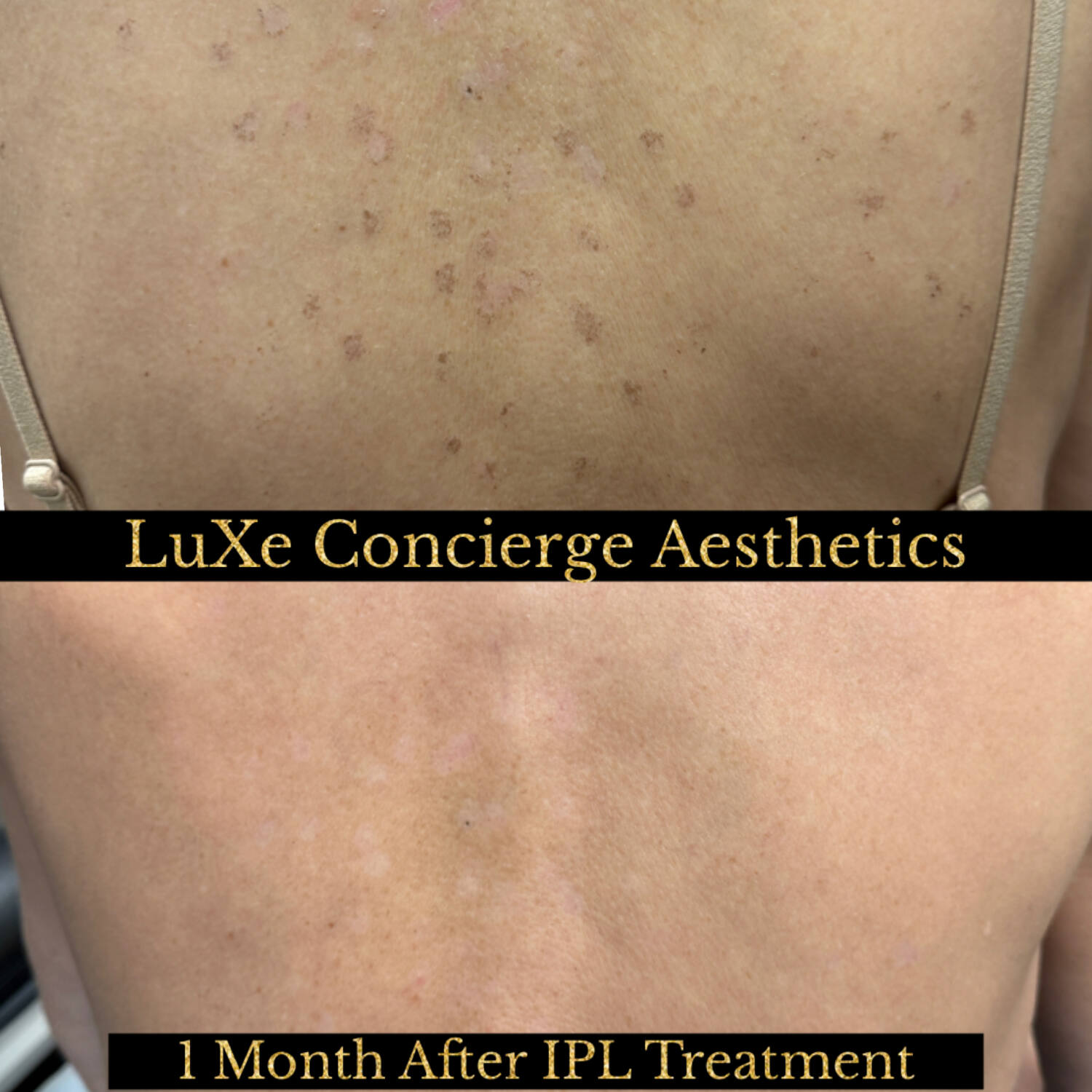
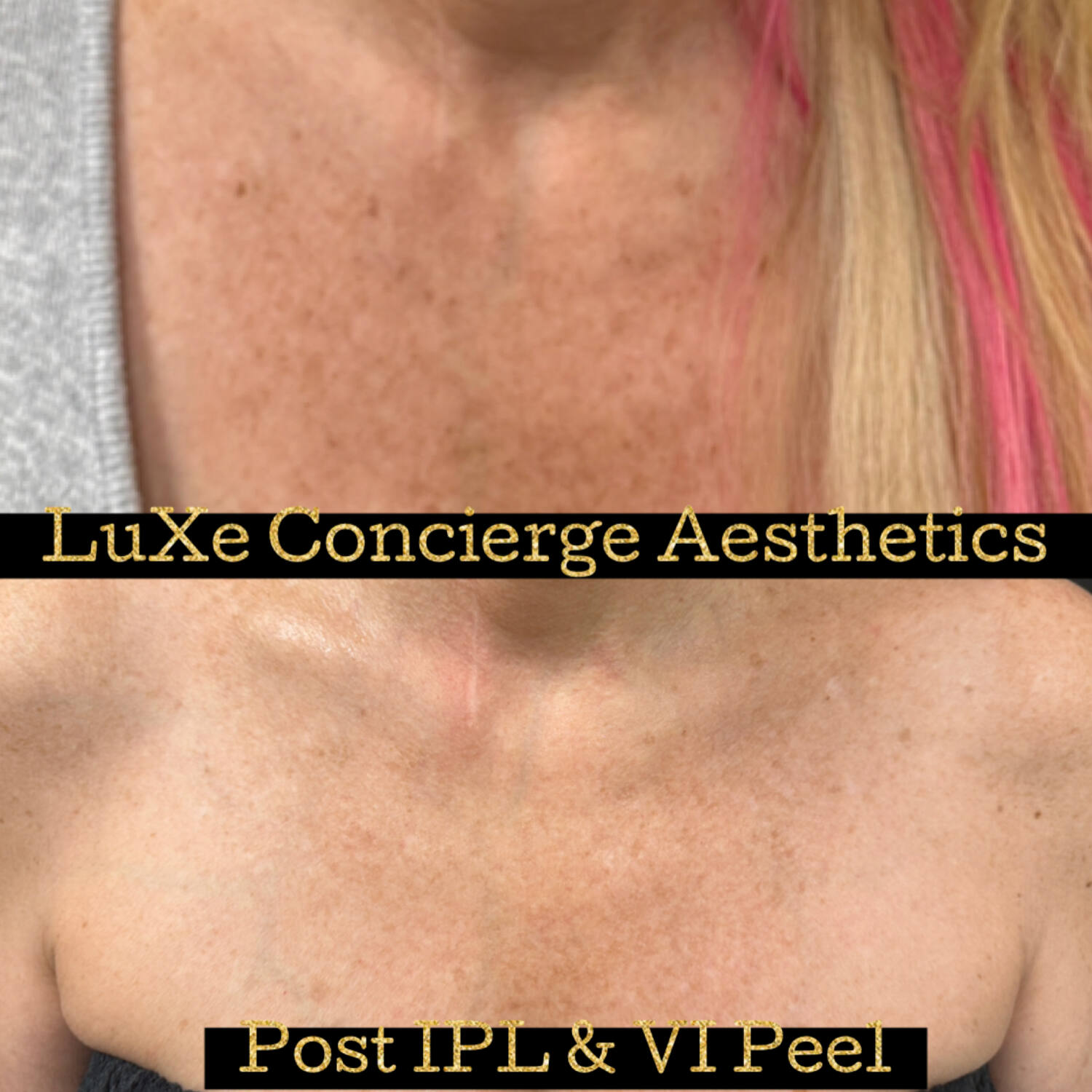
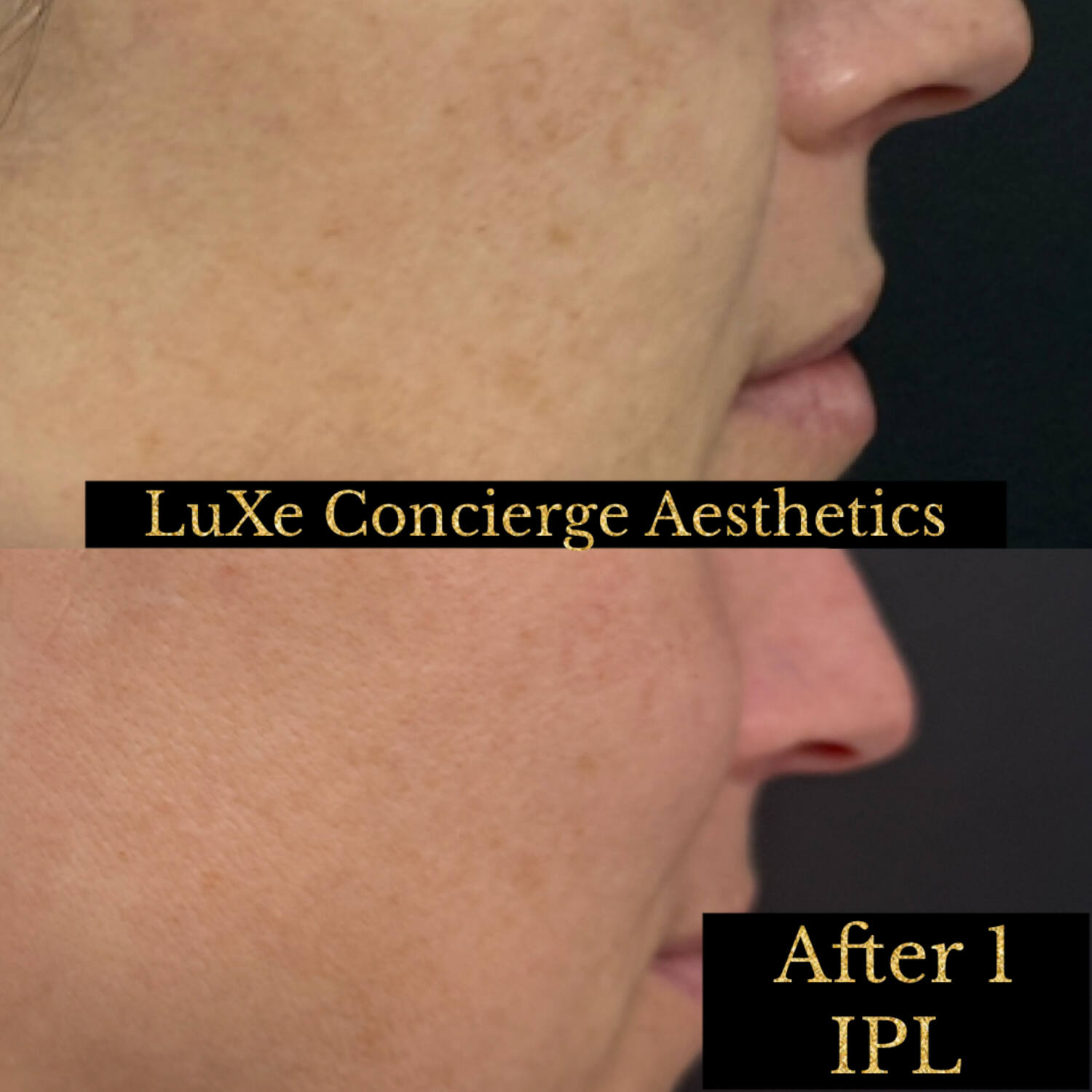
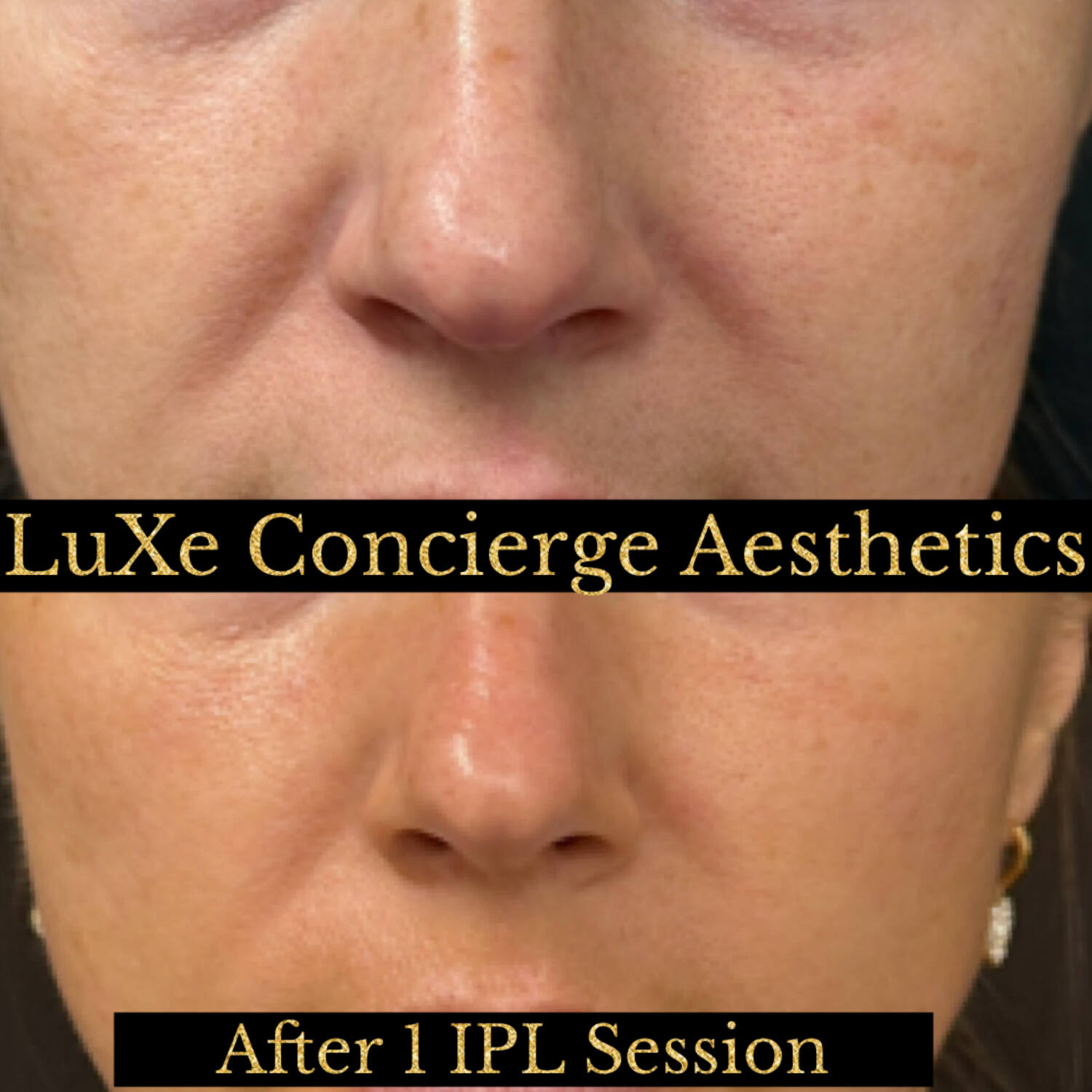
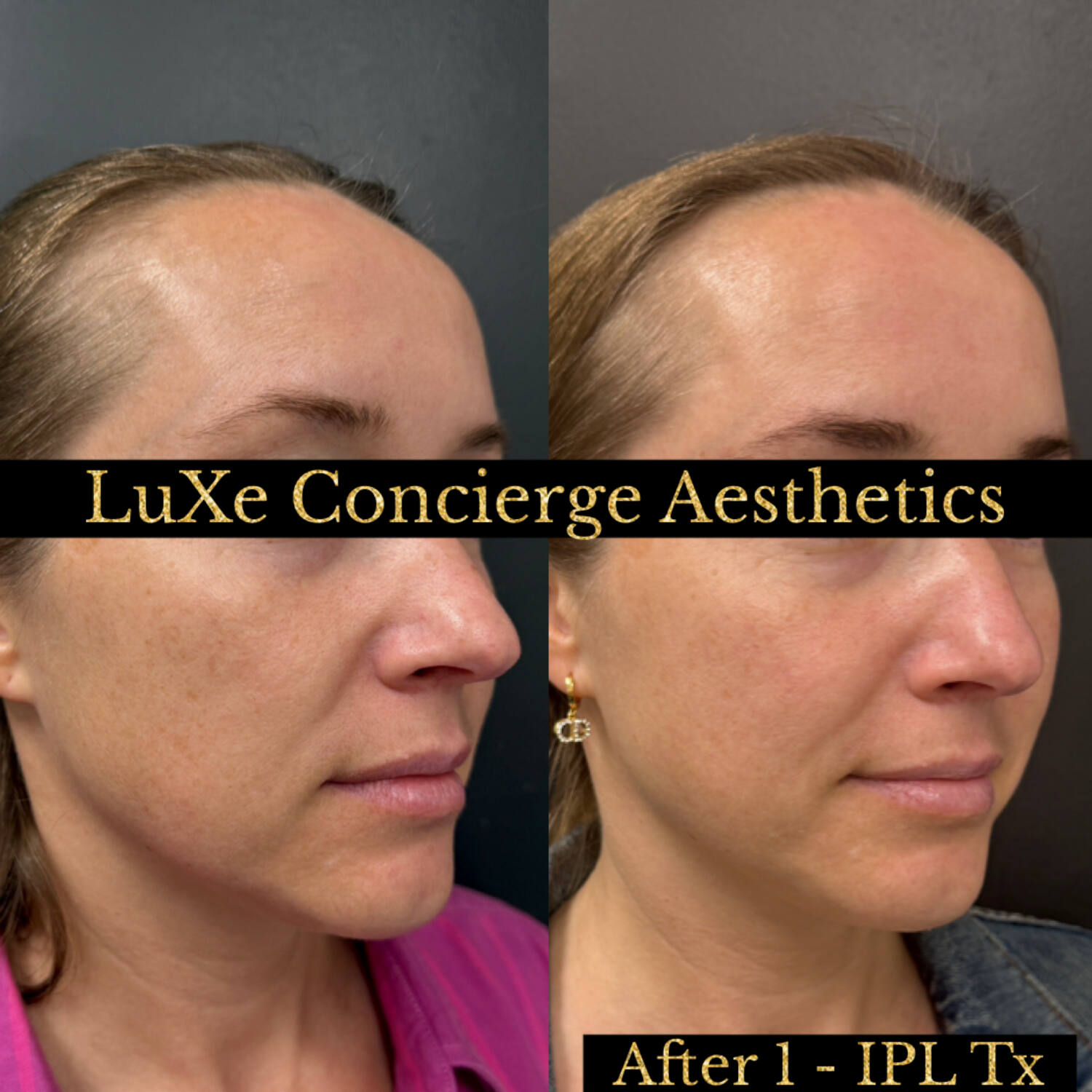
Before & After: IPL Results
IPL Treatment Videos
What is IPL?
Unique Aspects of IPL
Indications for IPL
Procedure and Mechanism
Anti-aging Benefits
Pre-Treatment Guidelines?
Before your IPL photofacial:
- Avoid direct sun exposure and sunless tanning products for four weeks prior.
- Avoid other laser treatments or chemical peels for four weeks prior.
- Avoid neurotoxin or filler injections for two weeks prior.
- Discontinue actives such as retinol or hydroquinone three days prior.
- Tell your provider about any medications you take, as some can affect your results.
Treatment Experience
Treatment Duration and Recovery
Post-Treatment Care
After your IPL photofacial:
- Pigment: brown spots look darker right after treatment and, over 2–3 days, may darken further and feel scaly like coffee grounds. Within 1–2 weeks they flake off to reveal fresh skin.
- Cleanse gently twice daily with soap and lukewarm water, pat dry, and moisturize 2–3 times a day. If crusting or peeling occurs, do not pick.
- Avoid actives (retinol, AHA/BHA) for seven days, and avoid flushing activities (exercise, spicy food, alcohol, heat) for two days.
- Avoid direct sun; apply zinc-based sunblock daily, reapply every two hours outdoors, and wear a wide-brimmed hat and sunglasses.
- Contact us if you notice any blistering or signs of infection.
Expectations and Longevity
Side Effects
How much does an IPL photofacial cost?
Is IPL suitable for a wide range of skin tones?
Does IPL hurt?
How many IPL sessions will I need?
What is the difference between IPL and a laser?
Can IPL treat rosacea and facial redness?
Can IPL be combined with other treatments?
For discrete facial vessels, cherry angiomas or leg veins, we may recommend our 1064-nm vascular laser instead.
Related Treatments at LuXe Concierge Aesthetics
Chemical Peels, Melasma & Pigmentation, Vascular Laser, Pico Laser, Erbium Glass Laser
Patients travel from Weston, Plantation, Cooper City, Pembroke Pines, Southwest Ranches, Sunrise, and Fort Lauderdale for IPL photofacials at LuXe Concierge Aesthetics in Davie, FL.