
Pico Laser in Davie, FL
Who is pico laser best for?
“Pico is my go-to for pigment. Sun spots, freckles, blotchy tone, and melasma when it’s treated gently and backed by the right home care. The energy is delivered in trillionths of a second, so it breaks up pigment with far less heat than older lasers, and that’s why I can use it on deeper skin tones where IPL isn’t safe. It’s also excellent for tattoo removal. What it won’t do is resurface deep wrinkles or scars. For that I use erbium or CO2.”
— Deborah Lenchus, MSN, APRN
Picosecond Laser Treatment
Pico laser treatment is now available at LuXe Concierge Aesthetics in Davie on our new nuCORE laser platform. A picosecond laser fires pulses so short they’re measured in trillionths of a second. That burst of energy shatters pigment and tattoo ink into tiny particles your body clears on its own, while very little heat reaches the skin around it. You get less downtime, and the treatment is safe for more skin tones.
Pico laser is ideal for:
- Sun spots, age spots & freckles
- Melasma & post-inflammatory hyperpigmentation (dark marks left after acne or irritation), using a gentle, maintenance-minded plan
- Dull, uneven tone and a rough surface (low-energy “laser toning”)
- Mild acne scarring & fine texture, as part of a combined plan
- Unwanted tattoos. Black and dark inks respond best
The 1064 nm wavelength is suitable for all skin types (Fitzpatrick I–VI) when the settings are matched to your skin. Every treatment is planned and performed by nurse practitioner Deborah Lenchus, never a technician.
At a Glance
- Treatment time15–30 minutes for the face; tattoos vary by size
- ComfortQuick, warm snaps; numbing cream for tattoos
- DowntimeLittle to none for toning; 5–7 days of flaking for dark spots; 1–2 weeks of healing for tattoos
- SessionsPigment and tone: usually 3–6, spaced 4–8 weeks apart. Tattoos: often 6–10 or more, 6–8 weeks apart
- Skin typesI–VI with 1064 nm; the 532 nm wavelength is reserved for lighter skin
- ResultsGradual, building over the weeks after each session
Now available on our new nuCORE laser platform.
Medically reviewed by Deborah Lenchus, MSN, APRN · Last reviewed October 2026
What a Pico Laser Actually Does
Most pigment lasers work by heat. A pico laser works mostly by pressure. Its pulses are so fast that the pigment doesn’t have time to warm up; it fractures instead, a photoacoustic effect. The fragments are much smaller than older lasers leave behind, so your immune system can sweep them away more easily. Less heat also means less irritation to the surrounding skin, which lowers the chance of the rebound darkening that makes pigment treatment tricky on olive and deeper skin tones.
What Pico Laser Treats
Sun damage and brown spots. South Florida sun leaves its mark on faces, chests, arms and hands. Pico breaks up those spots so they fade over the following weeks.
Melasma and dark marks after acne. Low-energy pico toning can lighten stubborn pigment gradually without the heat that tends to aggravate it (more on melasma below).
Tone, glow and texture. Gentle pico passes brighten dull skin and smooth fine texture with essentially no downtime. It works well before an event.
Tattoo removal. Pico is the technology we reach for first on dark and multicolored tattoos, particularly black and dark blue ink.
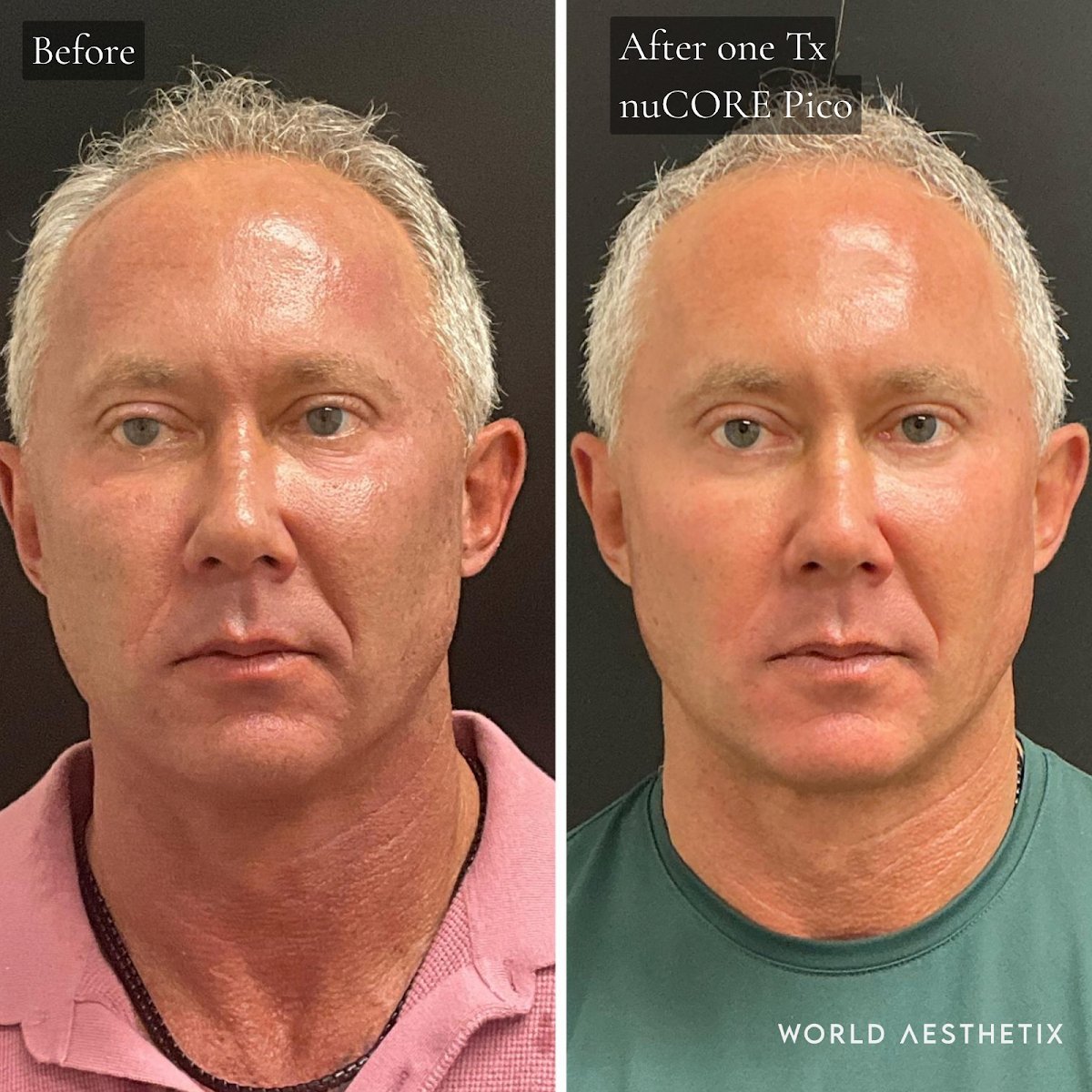
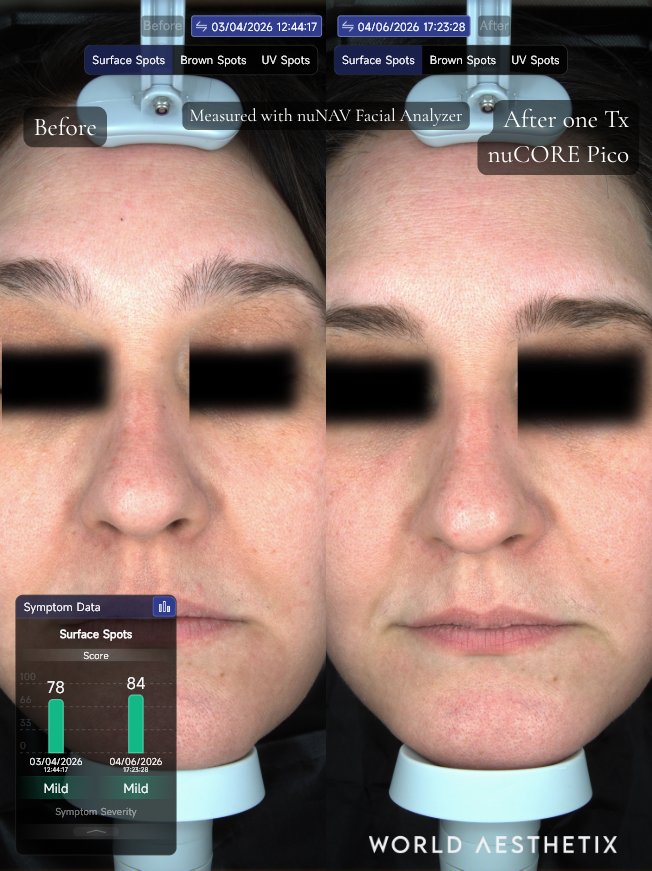
Pico, IPL or Q-Switch: Which Is Right for You?
We offer all three, so the recommendation comes down to your skin, not to which machine is in the room. IPL is great for scattered brown and red on lighter skin, but it isn’t safe for deeper skin tones or melasma. Pico handles pigment across every skin type and goes after stubborn ink. Our Q-switched laser uses nanosecond pulses. Pico’s picosecond pulses are about a thousand times shorter, which breaks ink into finer particles. That often means fewer sessions and a lower risk of post-inflammatory darkening, which matters most for medium and deeper skin tones.
Pico Laser for Melasma: The Honest Version
Melasma is a chronic condition driven by sun, heat and hormones. No laser cures it. What pico can do, used at low energy over a series, is lighten it with far less risk of flaring than hotter lasers. It works best alongside daily mineral sunscreen, a pigment-suppressing home routine and, for some patients, a Cosmelan or Dermamelan program. Expect to need maintenance, and expect a flare after a sunny vacation. Aggressive treatment makes melasma worse, which is exactly why settings matter so much.
Skin Type and Safety
This is where pico earns its place. The 1064 nm wavelength passes through the skin’s surface pigment with little absorption, so it’s the pigment and tattoo laser we can use safely on Fitzpatrick IV–VI skin. The shorter 532 nm wavelength treats superficial spots and red ink, but it’s kept for lighter skin. On deeper skin tones we start conservatively and may test-spot first. The biggest safety factor for every skin type is simple: come untanned.
Who Should Wait or Skip It
Pico treatment is postponed during pregnancy; with an active infection, open wound or cold sore in the area; on recently tanned or sunburned skin; and after recent isotretinoin (Accutane) use. We also avoid it with light-sensitivity disorders or photosensitizing medications, and with a history of oral gold therapy. If you tend to form keloids, we talk that through first. Your health history and medications are reviewed at your consultation.
What to Expect During Treatment
Your skin is cleansed, eyes are protected, and numbing cream is applied for tattoos. The laser feels like quick, warm snaps and you’ll hear a light popping sound. That’s normal. Pigment spots may look a little darker right away. Tattoos briefly turn white (called “frosting”), which fades within minutes. A full-face session takes about 15–30 minutes.
Downtime and Healing
Laser toning: mild pinkness for a few hours, and you can usually go right back to your day. Brown spots: treated spots darken and look like coffee grounds, then flake off over 5–7 days. Tattoos: expect redness, swelling and sometimes pinpoint bleeding or small blisters, with light crusting that heals over one to two weeks.
How Many Sessions You’ll Need
For pigment, tone and melasma, most people need three to six sessions spaced four to eight weeks apart, plus occasional maintenance. Some isolated sun spots clear in one or two. Tattoos take longer, often six to ten sessions or more, six to eight weeks apart. The number depends on ink colors, density, age and where the tattoo sits on the body. We give you a realistic estimate at your consultation.
What Pico Pairs Well With
Pico handles color. For texture, pores and scarring, we pair it with Erbium Glass resurfacing. For melasma, it complements medical-grade peels and home care. We space everything safely so tone and texture improve together.
Carbon Laser Facial (the “Hollywood Peel”)
A 30-minute laser facial with no downtime, on the same nuCORE platform.
Some treatments are about fixing a problem. This one is about walking out looking like you slept nine hours. The carbon laser facial, often called the Hollywood peel because of who made it famous, uses a thin layer of medical-grade carbon and the 1064 nm laser to lift oil, debris and dead cells off the surface of the skin while gently warming the layer beneath it. Pores look smaller, tone looks more even, and makeup sits better. There is nothing to peel, nothing to hide, and nothing stopping you from going to dinner afterward.
“I think of the carbon facial as the laser version of a really good facial. It won’t replace a resurfacing series for scars or deep lines, and I would never sell it that way. But for oily, congested, dull skin, or for anyone who wants to look polished before an event, it is one of the easiest yeses on my menu.” — Deborah Lenchus, MSN, APRN
How it works. We cleanse the skin and apply a thin layer of liquid carbon, which settles into the pores and binds to oil and surface debris. The laser then passes over the face twice. The first pass runs low and defocused: the carbon absorbs the light and warms, loosening what is sitting in the pores. The second pass runs at higher energy, and this is where the “peel” happens: the laser vaporizes the carbon particles, and as they lift away they take the oil, dead cells and debris with them. That same pulse delivers mild heat to the upper dermis, which nudges collagen over time and gives the skin a firmer, more awake look for the next few weeks. Because the laser is targeting the carbon rather than your pigment, it is safe for Fitzpatrick I through VI, including deeper skin tones.
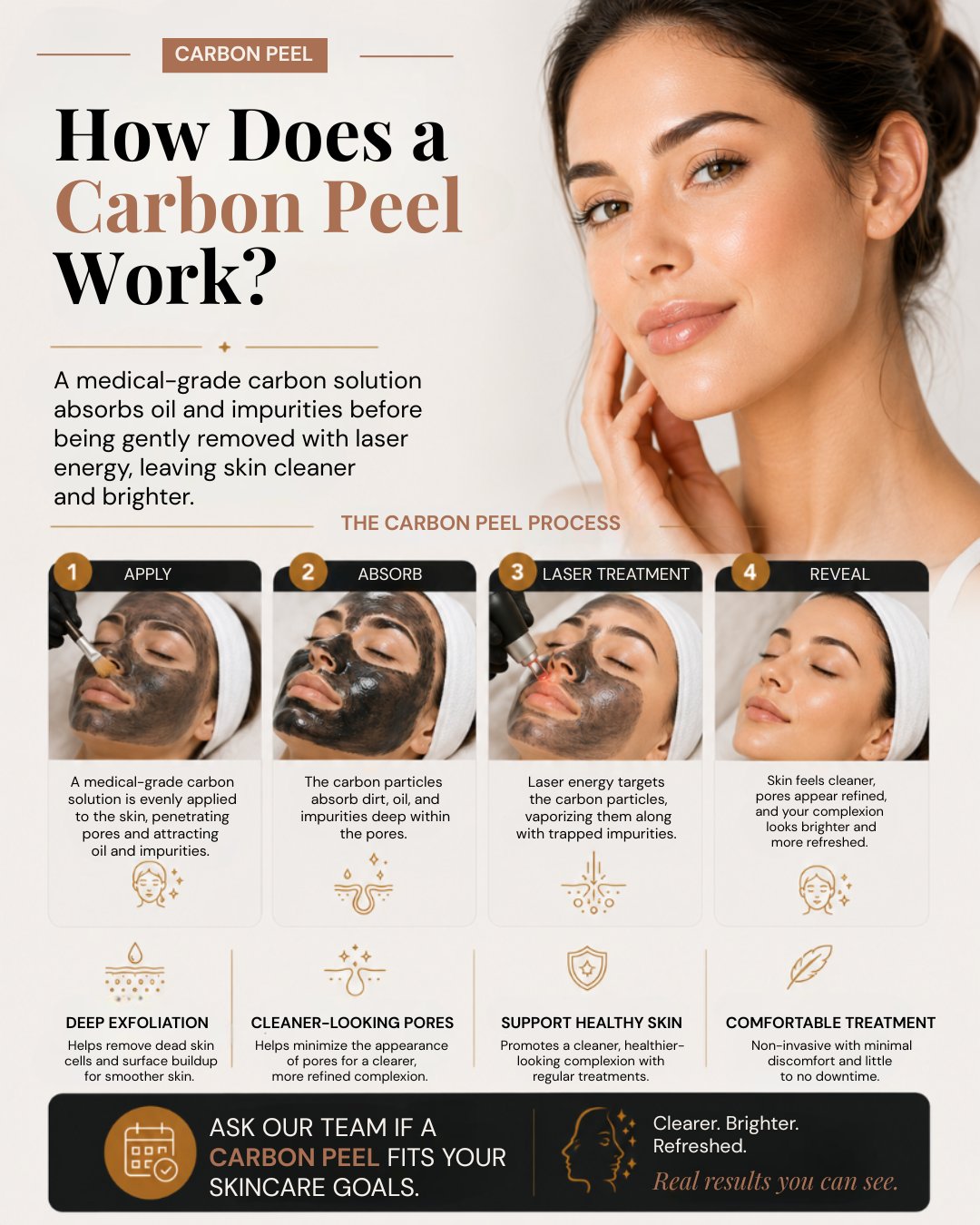
What it helps with. Enlarged-looking pores and blackheads, oily or congested skin, dull or uneven tone, mild active acne, rough surface texture, and the pre-event glow when you need to look your best in a week or less. What it will not do is remove deep acne scarring, etched-in wrinkles or stubborn brown spots; for those we would use the Pico fractional lens below, Erbium Glass 1540, or a pigment program. Plenty of patients do a carbon facial between those series simply because they like how their skin looks after one.
What the appointment feels like. Plan on about 30 minutes. There is no numbing cream; most people describe a warm, light snapping sensation and the faint smell of the carbon lifting off. You may be a little pink for an hour or two. Makeup can go on the same day, and you can go straight back to work or out for the evening.
How often. You will see a difference after one session, which is why it works so well before a wedding, a reunion or a photo shoot; three to seven days before is ideal. For lasting change in pore size, oil and tone, we recommend a series of four to six treatments about a month apart, then a monthly or seasonal maintenance visit. Many of our members build it into their routine the way they would a facial.
Before and after. Stop retinoids, glycolic or salicylic acids and other exfoliating actives 3 to 5 days before and hold them 3 to 5 days after. Avoid sun, tanning and self-tanner for two weeks before. Skip hot yoga, saunas and hard workouts for 48 hours afterward, and wear mineral SPF 50 every morning. We do not treat over active cold sores, open lesions, a fresh tan or sunburn, or within a few weeks of isotretinoin (Accutane). If you have melasma, tell us; we keep the energy conservative and may pair this with a pigment program rather than treating on its own.
Pairing it. The carbon facial sits comfortably alongside almost everything else we do: an IPL visit, Pico toning, the finishing step in an acne program, or the week before a filler or neurotoxin appointment so the skin matches the result. Not on the same day as a chemical peel; we space them.
Cost. Current pricing for a single session or a prepaid series is listed on our online booking page, and we confirm your plan at your consultation. LuXe members receive their tier pricing.
Pico Facial: Texture, Pores and Tone in One Visit
The same pico handpiece takes a fractional lens that splits each pulse into a grid of tiny high-intensity points. Instead of treating a single spot, it creates microscopic zones of injury under an intact surface, and the skin responds by remodeling collagen. We use it for enlarged-looking pores, mild acne scarring, fine lines, crepey texture and the general dullness that comes with sun and time. Skin is pink for a few hours and that is usually the whole recovery. For pigment we use the standard lens at low energy (laser toning); for texture we use the fractional lens; many treatment plans alternate the two. If you want a quick, no-downtime polish before an event, the carbon laser facial above is often the better place to start.
With Lasers, the Provider Is Everything
Choosing the wavelength, energy and spacing for your skin is a medical decision, and so is knowing when not to treat. Every pico treatment at LuXe Concierge Aesthetics is performed by nurse practitioner Deborah Lenchus, who brings 20 years in aesthetics and teaches advanced techniques to nurse practitioners, PAs and physicians through LuXe Concierge Aesthetics and Elevate Aesthetics Academy.
Ready to fade the spots, the tattoo, or the melasma that won’t quit? Book a consultation or call (754) 715-5667.
What is a pico laser?
A pico laser is a picosecond laser. It delivers pulses lasting trillionths of a second that shatter pigment and tattoo ink into tiny particles your body clears naturally. Because it relies on pressure rather than heat, it’s gentler on the surrounding skin than older pigment lasers.
Does pico laser hurt?
Most people describe it as quick, warm rubber-band snaps. Facial pigment and toning treatments are very tolerable. Tattoo removal is more intense, so we use numbing cream and cooling for comfort.
How many pico laser sessions will I need?
For sun spots, uneven tone and melasma, most people need three to six sessions spaced four to eight weeks apart, then occasional maintenance. Tattoos usually need six to ten sessions or more, spaced six to eight weeks apart.
What is the downtime after pico laser?
Very little. Laser toning leaves you mildly pink for a few hours. Dark spots darken and flake off over about five to seven days. Tattoo treatments need one to two weeks for redness, swelling and light crusting to heal.
Is pico laser safe for dark skin?
Yes. The 1064 nm wavelength is suitable for all skin types, including Fitzpatrick IV–VI, when the settings are matched to your skin. We start conservatively on deeper skin tones, and coming in untanned is essential.
Can pico laser treat melasma?
It can lighten melasma when used at low energy over a series, together with daily sunscreen and a pigment-suppressing home routine. Melasma is chronic, though. No laser cures it, and maintenance is expected.
Is pico better than Q-switch for tattoo removal?
Pico pulses are roughly a thousand times shorter than Q-switched pulses, so they break ink into finer particles. That often means fewer sessions and less heat to the skin. We offer both and recommend based on your tattoo and skin type.
Which tattoo colors respond best?
Black and dark blue respond best. Red and some warm colors respond to the 532 nm wavelength on lighter skin. Green, light blue and yellow are harder to clear and may only fade.
When will I see pico laser results?
Brown spots usually fade within one to two weeks of each session. Tone and melasma improve gradually over a series. Tattoos lighten over the six to eight weeks between visits as your body clears the ink.
How much does pico laser cost?
Cost depends on the area treated, or the size and colors of a tattoo, and whether you choose a single session or a series. You receive a clear quote at your consultation.
Pre-Treatment Guidelines
Before your pico treatment:
- Avoid sun exposure, tanning and self-tanner for four weeks.
- Stop retinoids, exfoliating acids and scrubs one week before.
- Tell us about any medications, recent isotretinoin (Accutane) use, or a history of cold sores. If we’re treating near the mouth, you may need an antiviral beforehand.
- Arrive with clean skin, free of makeup and lotion. Shave the area if a tattoo sits under hair.
Post-Treatment Care
After your pico treatment:
- Apply mineral SPF 30+ every day and avoid direct sun.
- Skip heat, heavy sweating, saunas and hot tubs for 24–48 hours.
- Avoid retinoids, acids and scrubs for about five to seven days.
- Cleanse gently and moisturize. Let darkened spots flake off on their own and don’t pick.
- For tattoos: keep the area clean with a thin layer of healing ointment, don’t pop blisters or pick scabs, and don’t swim or soak until healed.
- Contact us if you notice blistering on the face or any signs of infection.
Is the carbon laser facial the same as the Hollywood peel?
Yes. ‘Hollywood peel,’ ‘China doll facial’ and ‘carbon peel’ are all names for the same treatment: a carbon lotion followed by a 1064 nm laser pass.
Will my skin peel after a carbon facial?
No. Despite the name, there is no visible peeling. The ‘peel’ is the carbon lifting off during the second laser pass.
Is the carbon facial safe for dark skin?
Yes. The 1064 nm wavelength is the one we rely on for deeper skin tones because it largely bypasses melanin. We still start conservatively at your first visit.
Looking for texture and pore refinement instead of pigment correction? See our Erbium Glass 1540 laser.
Related Treatments at LuXe Concierge Aesthetics
IPL Photofacial, Erbium Glass Laser, Q-Switch Tattoo Removal, Melasma & Pigmentation
Patients travel from Weston, Plantation, Cooper City, Pembroke Pines, Southwest Ranches, Sunrise, and Fort Lauderdale for pico laser treatment at LuXe Concierge Aesthetics in Davie, FL.