
Melasma & Pigmentation (Cosmelan & Dermamelan)
Medically reviewed by Deborah Lenchus, MSN, APRN · Last reviewed July 2026
What Is Melasma?
Melasma is a common form of hyperpigmentation that appears as brown or gray-brown patches, usually on the cheeks, forehead, upper lip, and bridge of the nose. It tends to be symmetrical and is far more common in women and in medium-to-darker skin tones. Unlike a simple sun spot, melasma is a stubborn, deeper-rooted condition driven by a combination of triggers — which is exactly why it needs a thoughtful, medically guided program rather than a single quick fix.
What Causes Melasma?
Melasma is driven mainly by hormones and light. Estrogen and progesterone — from pregnancy, birth control, or hormone therapy — can switch on the pigment-producing cells, which is why it’s sometimes called the “mask of pregnancy.” Sun exposure and even heat then activate and darken it further. There’s often a genetic component as well. Because these triggers are ongoing, melasma is considered a chronic, relapsing condition that’s managed over time rather than cured in one visit.
Why Melasma Needs a Specialized Approach
Here’s what makes melasma tricky: the wrong treatment can make it dramatically worse. Aggressive lasers, IPL, and excessive heat can flare melasma and cause rebound darkening, especially in darker skin. Successful treatment instead combines gentle, targeted pigment control with disciplined sun protection and long-term maintenance. The goal is to fade the pigment, calm the overactive cells, and keep it from coming back.
How Melasma Is Treated at LuXe
Melasma responds best to a layered, personalized program. At LuXe Concierge Aesthetics, that can include professional depigmentation programs like Cosmelan and Dermamelan, prescription-strength topical ingredients, gentle chemical peels, and a carefully chosen home-care routine — all anchored by rigorous daily sun protection. Any energy-based treatment is approached with great caution and only when appropriate. Your specific plan is built around your skin type, your triggers, and how your melasma behaves.
Cosmelan and Dermamelan Depigmentation Programs
Cosmelan and Dermamelan are professional, in-office depigmentation treatments followed by a structured home-care protocol. They work by reducing melanin production and accelerating cell turnover to fade existing pigment, making them among the most effective options available for melasma and stubborn discoloration. Because they’re powerful, they’re always guided by a provider and paired with a maintenance plan. Detailed answers about each are in the FAQs below.
Who Is a Good Candidate?
Anyone struggling with melasma or persistent, uneven pigmentation who is ready to commit to a program and diligent sun protection is a good candidate. Melasma treatment rewards consistency, so the best results go to patients who partner with their provider on both the in-office treatments and the daily home routine. A consultation and skin assessment shape the right plan for you.
What to Expect
Treating melasma is a process, not a single appointment. Depending on the program, you may experience some redness, flaking, or temporary sensitivity as pigment is shed and the skin renews. Improvement builds over weeks, and because melasma is prone to returning, a maintenance phase — gentle topicals and unwavering sun protection — is part of every successful plan. Patience and consistency are what deliver lasting clarity.
Sun Protection: The Non-Negotiable
No melasma treatment succeeds without sun protection, because UV light and heat are its biggest triggers. Broad-spectrum SPF worn and reapplied daily — ideally a tinted mineral sunscreen that also blocks visible light — along with hats and shade, is essential both during treatment and for life. This single habit does more to control melasma than almost anything else.
Why It Matters Who Treats Your Melasma
Melasma is one of the easiest conditions to worsen with the wrong approach, so medical judgment truly matters. At LuXe Concierge Aesthetics, melasma is treated under the care of Deborah Lenchus, MSN, APRN, a nurse practitioner with more than twenty years of experience who teaches advanced aesthetic techniques to other nurse practitioners, PAs, and physicians through both LuXe Concierge Aesthetics and Elevate Aesthetics Academy, and who has performed live VI Peel demonstrations and presented at medical conferences sponsored by VI Peel. That expertise guides a safe, effective, individualized plan.
Why Choose LuXe Concierge Aesthetics
LuXe is a private, concierge-style practice that treats melasma with a careful, layered, medically guided approach rather than a one-size-fits-all laser. Patients travel from Weston, Plantation, Cooper City, Pembroke Pines, Southwest Ranches, Sunrise, and Fort Lauderdale for real, lasting help with stubborn pigmentation.
Ready to fade melasma for good? Book a consultation to build your personalized pigmentation plan. Call (754) 715-5667 or book online today.
Fade Melasma & Stubborn Pigmentation
If you’ve tried creams, facials, and even lasers and your dark patches keep coming back, you’re not alone. Melasma and stubborn hyperpigmentation are some of the hardest skin concerns to treat, especially in the South Florida sun. At LuXe Concierge Aesthetics in Davie, FL, we use Cosmelan® and Dermamelan® by mesoestetic — two of the most established professional depigmentation systems in the world — to visibly fade discoloration and help keep it from returning. Both are safe for all skin tones, including deeper complexions where many lasers carry more risk.
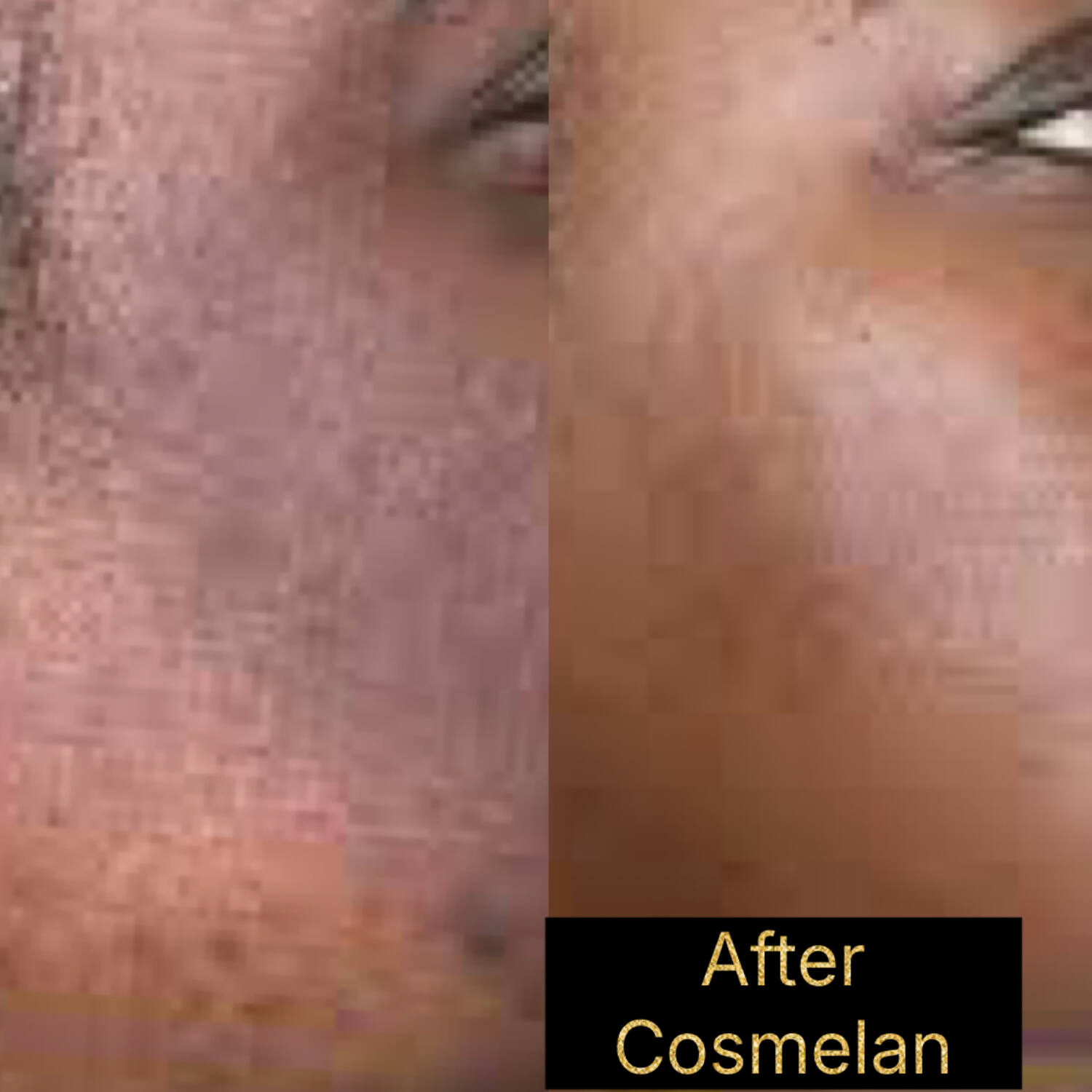
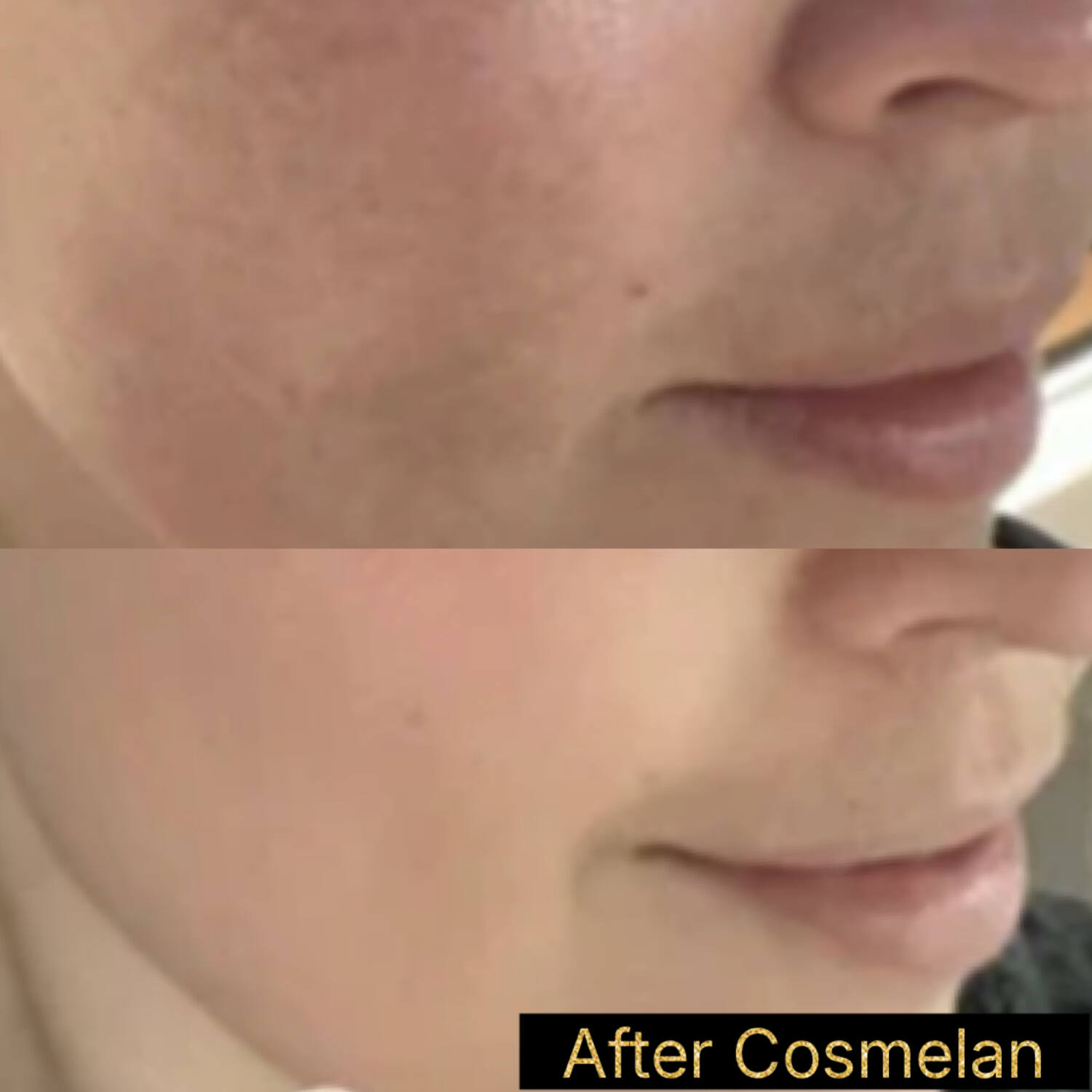
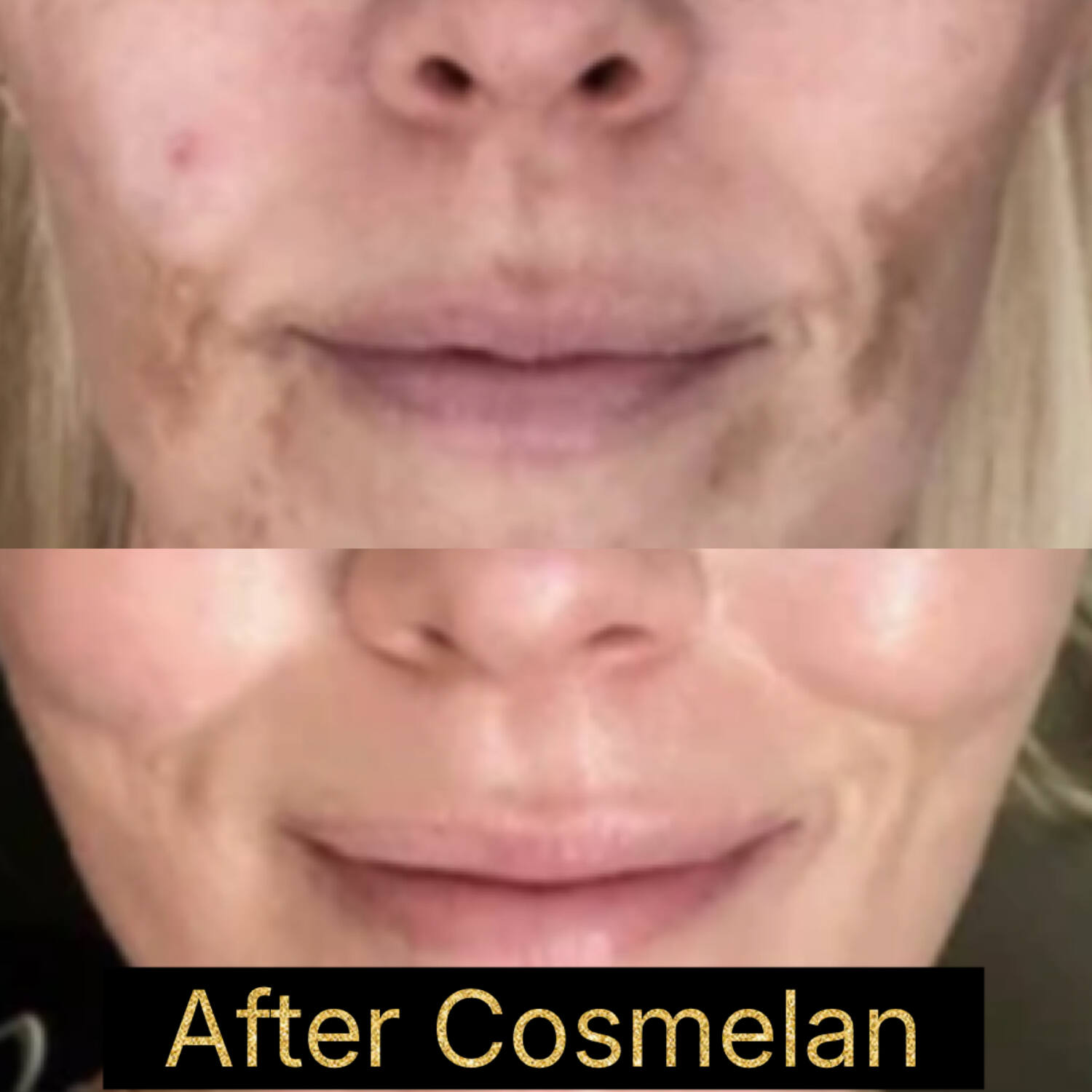
Cosmelan Results
Melasma & Pigmentation — Common Questions
What do Cosmelan and Dermamelan treat?
How does the treatment work?
Cosmelan vs. Dermamelan — what is the difference?
What should I expect afterward?
Is Cosmelan safe for darker skin tones?
Is melasma curable?
How soon will I see results?
How much downtime is there?
Why choose LuXe Concierge Aesthetics for melasma treatment?
Related Treatments at LuXe Concierge Aesthetics
Chemical Peels, IPL Photofacial, Fractional CO2
Patients travel from Weston, Plantation, Cooper City, Pembroke Pines, Southwest Ranches, Sunrise, and Fort Lauderdale for melasma and pigmentation treatment at LuXe Concierge Aesthetics in Davie, FL.
Cosmelan® FAQs
Does Cosmelan work on all types of spots?
Yes. Cosmelan treats spots of melanin origin, including melasma, post-inflammatory hyperpigmentation (PIH), sun and age spots (solar and senile lentigines), and freckles — pigment triggered by hormones, genetics, post-acne, or sun and worsened by sun exposure.
Yes. Cosmelan treats spots of melanin origin, including melasma, post-inflammatory hyperpigmentation (PIH), sun and age spots (solar and senile lentigines), and freckles — pigment triggered by hormones, genetics, post-acne, or sun and worsened by sun exposure.
What is the best time of year to do Cosmelan?
It can be done any time, but fall and winter are ideal when sun is less intense. In sunny climates or summer, strict sun avoidance and a very high SPF such as mesoprotech melan 130 are essential.
It can be done any time, but fall and winter are ideal when sun is less intense. In sunny climates or summer, strict sun avoidance and a very high SPF such as mesoprotech melan 130 are essential.
How long does the Cosmelan treatment take?
Cosmelan is a two-step protocol: a single in-office mask session plus an at-home regimen, lasting about six months in total, depending on how severe the pigment is.
Cosmelan is a two-step protocol: a single in-office mask session plus an at-home regimen, lasting about six months in total, depending on how severe the pigment is.
When will I see results, and why continue if I already see improvement?
The biggest change appears a few weeks after the in-office mask, but that only clears surface melanin. Continuing the home phase is what regulates the pigment-producing cell (melanocyte) and prevents the spots from returning.
The biggest change appears a few weeks after the in-office mask, but that only clears surface melanin. Continuing the home phase is what regulates the pigment-producing cell (melanocyte) and prevents the spots from returning.
What happens if I stop the home treatment?
Stopping interrupts the treatment. The melanocyte stays overactive and the spot returns as skin renews. Skipping daily photoprotection also greatly raises the risk of the pigment coming back.
Stopping interrupts the treatment. The melanocyte stays overactive and the spot returns as skin renews. Skipping daily photoprotection also greatly raises the risk of the pigment coming back.
Can Cosmelan be combined with other treatments?
Yes. In the later months it can be paired with maintenance products such as melan tran3x to help prolong your results.
Yes. In the later months it can be paired with maintenance products such as melan tran3x to help prolong your results.
Can I keep up my normal daily activities?
Yes, it is non-invasive. Just take extra care in the first few days after the mask — avoid pools, prolonged sun, and heavy sweating during the skin’s adaptation period.
Yes, it is non-invasive. Just take extra care in the first few days after the mask — avoid pools, prolonged sun, and heavy sweating during the skin’s adaptation period.
Can the spots come back after treatment?
Pigment can be visibly reduced, but it is a dynamic process, so a daily regulating depigmentation routine and year-round sun protection are essential to prevent repigmentation.
Pigment can be visibly reduced, but it is a dynamic process, so a daily regulating depigmentation routine and year-round sun protection are essential to prevent repigmentation.
How do I prevent new spots after treatment?
If you have ongoing triggers (hormones, pregnancy, sun, post-acne, etc.), keep a daily routine that combines a depigmenting product like melan tran3x with a high photoprotector such as melan 130 pigment control.
If you have ongoing triggers (hormones, pregnancy, sun, post-acne, etc.), keep a daily routine that combines a depigmenting product like melan tran3x with a high photoprotector such as melan 130 pigment control.
Does Cosmelan have side effects?
Used correctly under professional supervision, side effects are minimal. Expect temporary redness or irritation early on and mild peeling and sensitivity during the home phase, which resolve with the recommended home products.
Used correctly under professional supervision, side effects are minimal. Expect temporary redness or irritation early on and mild peeling and sensitivity during the home phase, which resolve with the recommended home products.
Does Cosmelan help acne?
Cosmelan is a depigmentation treatment, not a treatment for active acne, but it is effective on the dark marks acne can leave behind (post-inflammatory hyperpigmentation).
Cosmelan is a depigmentation treatment, not a treatment for active acne, but it is effective on the dark marks acne can leave behind (post-inflammatory hyperpigmentation).
What is the difference between Cosmelan and Dermamelan?
Both deliver excellent results. Cosmelan is an aesthetic treatment, while Dermamelan is a medical-grade, provider-supervised treatment with a newer patented formula designed for the most severe, resistant pigment, with results in about four months.
Both deliver excellent results. Cosmelan is an aesthetic treatment, while Dermamelan is a medical-grade, provider-supervised treatment with a newer patented formula designed for the most severe, resistant pigment, with results in about four months.
Is Cosmelan a peel?
It is often called a peel, but it is more than that. Unlike a traditional surface chemical peel, Cosmelan is a multi-phase professional program that also works on the source of the pigment.
It is often called a peel, but it is more than that. Unlike a traditional surface chemical peel, Cosmelan is a multi-phase professional program that also works on the source of the pigment.
Dermamelan® FAQs
How do I know if Dermamelan is right for me?
Your provider will determine whether Dermamelan is suitable for you during your consultation and skin assessment at LuXe Concierge Aesthetics.
Your provider will determine whether Dermamelan is suitable for you during your consultation and skin assessment at LuXe Concierge Aesthetics.
Is Dermamelan painful?
No. The skin renews gradually in a controlled way. After the in-office phase, expect mild redness and warmth that fade within 24 to 48 hours. During the home phase, slight flaking and some sensitivity are normal and ease with the recommended products.
No. The skin renews gradually in a controlled way. After the in-office phase, expect mild redness and warmth that fade within 24 to 48 hours. During the home phase, slight flaking and some sensitivity are normal and ease with the recommended products.
Can I keep my normal routine during Dermamelan?
Yes. It is a non-invasive topical treatment. It is important, though, to keep up the daily home regimen and to minimize sun exposure throughout.
Yes. It is a non-invasive topical treatment. It is important, though, to keep up the daily home regimen and to minimize sun exposure throughout.
Will the spots disappear completely and forever?
Spots are very significantly reduced, but any area that had a spot always carries a tendency to return, so ongoing homecare and specific sun protection are essential to prevent repigmentation.
Spots are very significantly reduced, but any area that had a spot always carries a tendency to return, so ongoing homecare and specific sun protection are essential to prevent repigmentation.
What is the best time of year for Dermamelan?
Ideally after summer, to avoid intense sun during treatment. Where sun is unavoidable, avoid direct exposure and use a hat and proper photoprotection.
Ideally after summer, to avoid intense sun during treatment. Where sun is unavoidable, avoid direct exposure and use a hat and proper photoprotection.
How is Dermamelan better than laser or peels?
Laser and peels only remove existing pigment and cannot prevent recurrence. Dermamelan both corrects and regulates — treating the cellular root of the problem and keeping melanin overproduction in check to help prevent the spots from coming back.
Laser and peels only remove existing pigment and cannot prevent recurrence. Dermamelan both corrects and regulates — treating the cellular root of the problem and keeping melanin overproduction in check to help prevent the spots from coming back.
Does Dermamelan have side effects?
Minimal when used correctly under professional supervision. Expect temporary redness or irritation early and mild peeling and sensitivity in the home phase, which resolve with the recommended home products.
Minimal when used correctly under professional supervision. Expect temporary redness or irritation early and mild peeling and sensitivity in the home phase, which resolve with the recommended home products.
When will I see Dermamelan results?
The most significant change comes within a few weeks of the in-office mask, but the full four-month protocol is needed to also regulate melanin overproduction for a lasting result.
The most significant change comes within a few weeks of the in-office mask, but the full four-month protocol is needed to also regulate melanin overproduction for a lasting result.
What is in the new Dermamelan formula?
It uses two exclusive patented complexes — (Syn)pigmentarget and Melaphennone — that work together to inhibit and reduce pigment production at the melanocyte, targeting even the most resistant spots.
It uses two exclusive patented complexes — (Syn)pigmentarget and Melaphennone — that work together to inhibit and reduce pigment production at the melanocyte, targeting even the most resistant spots.
Frequently Asked Questions
What do Cosmelan and Dermamelan treat?
These professional depigmentation systems treat melasma, sun and age spots, post-inflammatory hyperpigmentation (marks left by acne or irritation), and general uneven tone and dullness — and they’re safe for all skin tones, including deeper complexions where many lasers carry more risk.
These professional depigmentation systems treat melasma, sun and age spots, post-inflammatory hyperpigmentation (marks left by acne or irritation), and general uneven tone and dullness — and they’re safe for all skin tones, including deeper complexions where many lasers carry more risk.
How does the treatment work?
It happens in two phases. First, we apply a professional-strength depigmenting mask in the office that you keep on for a set number of hours before removing it at home. Because the mask needs to stay on for several hours, Cosmelan and Dermamelan appointments are scheduled in the morning or very early afternoon — this ensures there is enough time for the mask to work and for you to remove it at home before bedtime. Second, you follow a guided home regimen that maintains and continues your results over the following weeks and months. That home step isn’t optional — it’s what turns a temporary fade into lasting, even tone.
It happens in two phases. First, we apply a professional-strength depigmenting mask in the office that you keep on for a set number of hours before removing it at home. Because the mask needs to stay on for several hours, Cosmelan and Dermamelan appointments are scheduled in the morning or very early afternoon — this ensures there is enough time for the mask to work and for you to remove it at home before bedtime. Second, you follow a guided home regimen that maintains and continues your results over the following weeks and months. That home step isn’t optional — it’s what turns a temporary fade into lasting, even tone.
Cosmelan vs. Dermamelan — what is the difference?
Both are professional two-phase depigmentation systems by mesoestetic, and the main difference is intensity. Cosmelan is the versatile, widely used, hydroquinone-free option that fades melasma, sun spots, and uneven tone across all skin types with a gentler profile. Dermamelan is the more intensive, medical-grade protocol designed for more resistant, stubborn, or long-standing melasma. At your consultation, your nurse practitioner assesses your skin, its history, and your triggers to recommend the right protocol for you.
Both are professional two-phase depigmentation systems by mesoestetic, and the main difference is intensity. Cosmelan is the versatile, widely used, hydroquinone-free option that fades melasma, sun spots, and uneven tone across all skin types with a gentler profile. Dermamelan is the more intensive, medical-grade protocol designed for more resistant, stubborn, or long-standing melasma. At your consultation, your nurse practitioner assesses your skin, its history, and your triggers to recommend the right protocol for you.
What should I expect afterward?
Expect some redness, flaking, and peeling for several days as your skin renews, similar to a peel. Diligent sun protection and following your home products exactly are essential — both for your results and because sun exposure is the main trigger for melasma returning.
Expect some redness, flaking, and peeling for several days as your skin renews, similar to a peel. Diligent sun protection and following your home products exactly are essential — both for your results and because sun exposure is the main trigger for melasma returning.
Is Cosmelan safe for darker skin tones?
Yes. It’s one of the reasons these systems are so widely used — they’re designed to work safely across all skin phototypes, including deeper complexions.
Yes. It’s one of the reasons these systems are so widely used — they’re designed to work safely across all skin phototypes, including deeper complexions.
Is melasma curable?
Melasma can’t be permanently cured, but it can be significantly reduced and kept under control with treatment plus ongoing sun protection and maintenance. That’s why we build a long-term plan rather than a one-off treatment.
Melasma can’t be permanently cured, but it can be significantly reduced and kept under control with treatment plus ongoing sun protection and maintenance. That’s why we build a long-term plan rather than a one-off treatment.
How soon will I see results?
Many people notice brightening within the first couple of weeks, with tone continuing to even out over the following months.
Many people notice brightening within the first couple of weeks, with tone continuing to even out over the following months.
How much downtime is there?
Plan for several days of redness and peeling. Most people schedule their treatment around their social calendar.
Plan for several days of redness and peeling. Most people schedule their treatment around their social calendar.
Why choose LuXe Concierge Aesthetics for melasma treatment?
Melasma is chronic and needs a real plan, not a one-off treatment. With 20+ years of experience, our nurse practitioner builds a protocol around your skin and your triggers, so you’re managing pigmentation for the long term rather than chasing it.
Melasma is chronic and needs a real plan, not a one-off treatment. With 20+ years of experience, our nurse practitioner builds a protocol around your skin and your triggers, so you’re managing pigmentation for the long term rather than chasing it.
Understanding your options? See our complete melasma treatment guide and daily skincare for melasma.